Professional Sports Photographer Melbourne: Event Planning and Shot Lists
Sports photography in Melbourne sits in a sweet spot where the city’s venues are serious, the weather can be unpredictable, and expectations are high. Athletes want clean action, clubs want consistency, and event organisers often need delivery that is fast and dependable. That combination is exactly where a professional sports photographer Melbourne earns their keep: not only with timing and technique, but with planning that survives real conditions on the ground.
I’ve photographed AFL, netball, soccer, and grassroots competitions where the “schedule” was really a best guess. I’ve also worked events where the lighting changed every thirty seconds, the sidelines were crowded, and a team’s media manager was juggling five other tasks. In those moments, the difference between a chaotic shoot and a smooth one is the plan in your head, the shot list you can rely on, and the discipline to make judgment calls without freezing.
If you’re building a photography day around a club event, a tournament, or a professional fixture, here’s how I approach planning and shot lists so the coverage feels intentional and the images come in usable, publishable form.
Start with the event’s real purpose, not the schedule on paper
The first thing I ask, even before I talk camera gear, is what the images are meant to do. Is the primary output a social media pack for the next 24 hours? Is it a sponsor deliverable with specific brand placements? Does the club want player portraits for year-in-review stories? Or is it a match gallery where action density is the priority?
The reason this matters is simple: your shot list changes based on the goal. If the event is about player development, you’ll spend more time on clean portraits, reaction shots, and moments that show effort. If it’s about broadcast-style coverage, you’ll bias toward peak action, transitions, and clean expressions. When you know the purpose, you can also make trade-offs. If a match goes long, you can decide whether to protect the most valuable types of frames rather than chase everything equally.
I also look at constraints that aren’t obvious until you’re on site. Some venues have strict media positions, others require accreditation passes that are checked at the gate. Some have fence lines and sponsor boards that will block wide angles unless you set up correctly. In Melbourne, weather is another factor that affects your timing. Even when the forecast looks fine, the wind can flip direction and mess with lens choices, and changing cloud cover can turn a stable exposure situation into a constant adjustment.
Venue walk-through mindset: where you stand becomes your story
If you can get on-site early, do it. Walk the venue with your future frames in mind. I’m not just checking sightlines. I’m mapping the flow of play, where players are likely to cluster, and which backgrounds are clean enough for a fast edit later.
For example, in sports photography Melbourne, the best “safe” positions often have a trade-off. You may get a clean background near midfield, but you’ll lose a clear angle to the near posts. Or you’ll get a fantastic corner angle, but you’ll be behind a group of spectators who move in and out. The moment you recognise the trade-off, you can plan for it. That means you know where you’ll capture key moments and where you’ll accept narrower coverage.
This is also where you decide how you’ll handle movement. If your subject travels across the frame quickly, you need room to pan smoothly. If the venue is tight, you may prioritise fixed positions for start-of-play and set plays, then use tighter crops for moving action. Your shot list should reflect the reality of how you can physically shoot.
Build a shot list that covers momentum, emotion, and context
A shot list isn’t a rigid checklist that kills creativity. It’s a safety net. The right list keeps you from missing the images your client will actually use, even when the match becomes intense or the day runs behind.
I like to structure shot lists around three layers:
- Momentum: action moments that show the sport in motion.
- Emotion: reactions, celebrations, frustration, focus before play.
- Context: team identity, venue environment, numbers on kits, coaches on the touchline, scoreboard moments when they help tell the story.
Then, I assign each “type” to what I can reliably capture from my position. If you’re shooting from the sideline, you’ll capture different kinds of context than someone on a corner or behind a goal.
Here’s a compact example of a match-focused shot list I’d use for a typical game day. It’s not the only way, but it’s the kind of structure that keeps coverage balanced when you’re moving fast.
- Peak action frames (clean bodies, ball position, readable expressions)
- Pre-play focus (setup moments, team huddles, the few seconds before action)
- Goal or decisive play documentation (celebration immediately after, not just the moment of impact)
- Coach and bench reactions (hands on hips, calls for play, composure under pressure)
- Post-play emotion (handshakes, winners’ reactions, determined looks from players who lost)
That list gives you the “what” without locking you into photographing every possible variation. You’ll still catch the unexpected moments, but you won’t end up with a gallery that is all action with no human story, or all celebration without clear match context.
Translate priorities into real timing on the day
Shot lists fail when they are treated like homework due at the end of the match. I plan when each set of frames matters.
For instance, early minutes of a game often deliver clear first-contact action and visible player expressions. Then there’s a phase where teams settle and play patterns repeat. That’s where you can be strategic: you don’t need to “spray” every moment, you can focus on the predictable moments that match your lens and position.
In the middle of a match, fatigue becomes visible, and that changes the emotion frames. You can get stronger expressions during stoppages and after physical contests. Toward the end, the “story” shifts again. If the game is close, you’ll see sprint intensity and body language that communicates tension, even before the ball arrives.
That timing approach is especially useful when you’re photographing multiple matches in one day, which is common for tournament coverage. The temptation is to keep chasing peak action because it feels like the highest value. I’ve learned that a balanced set, captured with consistent discipline, usually performs better for clients because it reads like a narrative, not random highlights.
Gear planning that matches the assignment, not the fantasy setup
Gear talk can become noise quickly, but in sports photography you do need a practical plan. The goal is reliability and speed. If you’re constantly changing settings, moving lenses, or re-mounting filters, you’ll miss decisive moments.
I run a simple gear strategy: enough redundancy for the day, but not so much that I lose time. I also plan for Melbourne weather and venue conditions. If rain is possible, the camera protection and lens cleanliness become part of your workflow, not an afterthought.
Here’s the kind of compact gear checklist I keep for event days where I need both action and usable portraits.
- 2 camera bodies (or reliable single-body redundancy if the assignment is smaller)
- 2 lenses that cover your most common focal lengths (for example, a telephoto for action and a mid-range option for portraits)
- A monopod or stable support if the venue setup makes panning easier with steadier movement
- Lens cloth and simple protection for dust and light rain
- Extra batteries and enough storage for the day’s shot volume
If you’ve never shot a long sports day, it’s easy to underestimate storage and battery demand. It’s not just the number of frames. It’s also the review time, the bursts, the occasional need to re-shoot after a wipe of the lens or a forgotten setting change. Planning for that prevents the worst kind of stress, the kind where you’re suddenly rationing shots mid-match.
Camera settings and focus behavior: the boring decisions that make the images work
For professional sports photographer Melbourne work, the most important “settings” are the ones that reduce your uncertainty during critical moments. Your autofocus mode, your burst behavior, and your exposure method should be chosen based on the lighting stability and subject movement patterns.
I generally prioritise autofocus tracking that can handle erratic movement, plus continuous shooting. But I also keep a mental habit: when the scene changes dramatically, I reassess. For example, a sudden cloud break that brightens the field can lead to exposure swings if you’re not using a consistent exposure approach. Similarly, if the sport is played in an open area with bright sky behind players, backlight can create focus confusion. In those cases, I adjust framing and exposure compensation rather than forcing every frame through the same settings.
A practical tip I learned the hard way: learn how your camera behaves when the background is busy. Stadium boards, chain-link fences, and sponsor signage can pull attention, and autofocus can latch onto the wrong plane. If you know which part of your frame is most reliable, you can compose accordingly and still keep the story intact.
Your planning must account for sideline reality: access, spacing, and people
On paper, a photographer might be “near the action.” In reality, the sideline can be crowded, photographers might share space with broadcast media, and clubs may have preferred positions. Sometimes you’ll be moved. Sometimes you’ll lose your spot at halftime for reasons you can’t control.
This is why your shot list needs to be adaptable. You should know what you must capture no matter where you end up, and what you can adjust if conditions change.
In Go to this website many Melbourne venues, the difference between capturing a clean action sequence and getting blocked frames can be one position shift of a few metres. If you can, communicate early with event staff about movement expectations. If you can’t, plan your “fallback frames.” For example, if you end up blocked for half a period, you can focus on the moments you can still access: player celebrations, coach reactions, and action that happens closer to your remaining clear sightline.
If you’re working with Pure Sport Images or another sports media team, this coordination becomes even more important. Their clients typically want a consistent look across teams, and that consistency comes from predictable framing choices and a workflow that doesn’t collapse under pressure.
Capture the emotion frames deliberately, not accidentally
It’s easy to focus on the ball and forget the human layer. But clients often use reaction frames more than you expect. A celebration isn’t just a nice-to-have, it can be the image that anchors a social post, a club recap, or a sponsor story.
In the field, the emotion frames are often available during stoppages and transitional moments. That’s where you can breathe, change pacing, and shoot with calmer timing. You don’t need the same burst length for these. You need a clean angle, good light on faces, and the patience to wait for the moment when the emotion peaks.
One of the most useful habits I’ve developed is to watch hands, eyes, and body posture. It’s the fastest way to predict which moments will land. Players don’t just react, they show intention. A coach about to communicate a set play has a different posture than a coach celebrating. A player after a missed chance carries it differently than a player after a successful tackle.
If you plan your shot list around momentum, emotion, and context, you’ll naturally create that emotional rhythm across the gallery.
Off-field coverage matters when the gallery needs a story arc
Not every sports photography request is only the match. Many events want a “full day” gallery: arrival, team huddles, pre-match preparation, and the community feel around the venue.
This is where you can differentiate a photographer from a machine. The camera does the technical work, but your ability to notice what’s meaningful makes the images publishable. A sponsor banner isn’t important because it exists. It’s important because someone is standing in front of it, proud and ready, or a junior player is being guided into position.
If the event is in a busy Melbourne precinct, you might also capture short establishing moments: the venue signage, the crowd energy, and the scene that tells people where they were. Those frames help editors and clients structure storytelling without needing to crop everything from action shots.
Workflow planning: the fastest way to lose quality is to edit without structure
You can have perfect technique on match day and still deliver a weaker gallery if your editing workflow is chaotic. I keep the editing plan aligned with the event’s purpose.
If the client needs quick turnaround for social posts, I’m selective about what I process immediately. I’ll pick frames that are compositionally strong and emotionally clear. Action frames that are technically sharp but visually confusing can slow clients down, because they don’t read well at thumbnail size.
For galleries meant for longer use, consistency matters more. I’m careful about colour balance, skin tones, and exposure consistency across bursts. That’s where Melbourne’s lighting variety can bite. Cloud cover can make everything look flat, while direct sun can create contrast jumps that feel distracting when a gallery is viewed as a set.
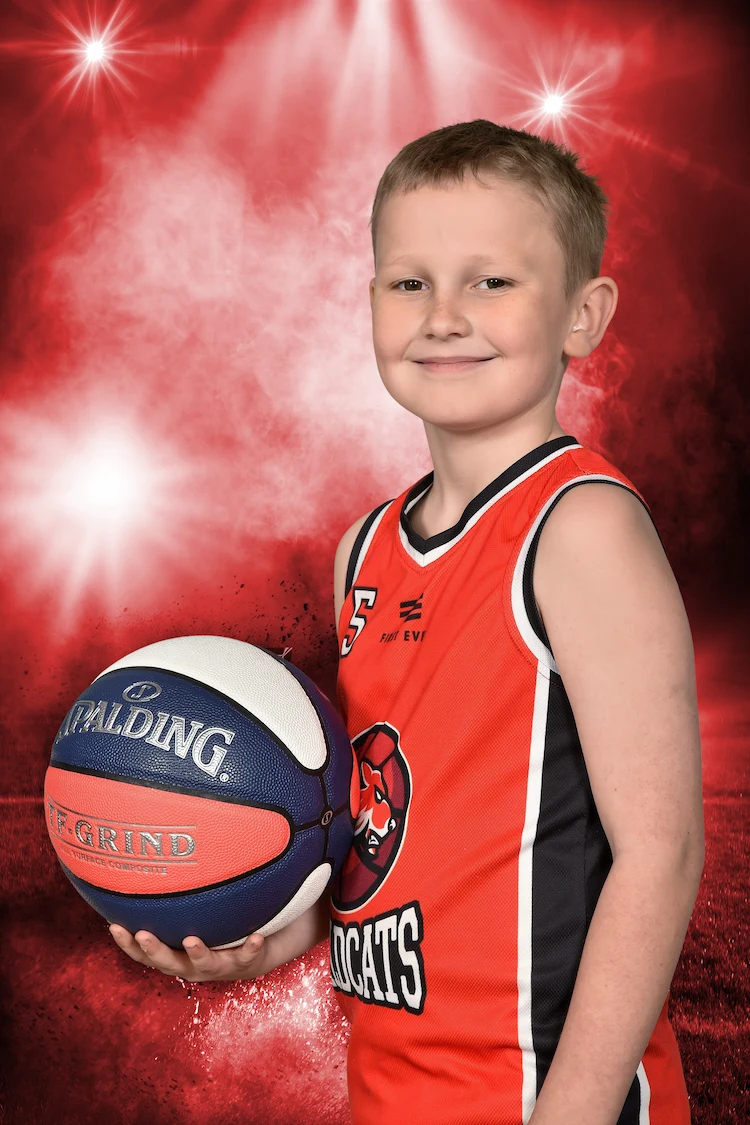
Whether you are shooting under Pure Sport Images or independently, the key is building an editing rhythm before you need it. When you rely on improvisation, you end up correcting the same issues repeatedly, and that costs time you might not have.
Handling edge cases: weather, delays, and the “we need more players in the photos” request
Sports days rarely behave. A match might start late. A player might be wearing warm-up gear longer than expected. Wind can make the ball harder to track. Light can change fast. These are the moments where your planning proves itself.
If weather is unpredictable, you plan for protective gear and you adjust your lens strategy. In overcast conditions, contrast is softer, so your exposures may need stabilisation to keep the look crisp. In brighter conditions, you protect highlights on jerseys and avoid distracting glare.
If the client asks for more player visibility, you adjust your framing choices mid-session. That could mean widening slightly, lowering your camera a touch for face-level expressions, or spending a short window during stoppages on portraits and small group shots. The trick is doing it without abandoning momentum. You can insert portrait time, but you shouldn’t let it drain the action coverage that the client came for.
And if the schedule slips, don’t panic. Use your shot list hierarchy. Capture the must-have types first, then fill the rest. That way, you deliver a coherent gallery even when the day doesn’t follow the plan.
Communicate the plan, so the client knows what they’re getting
One of the most professional habits you can build is clarity around deliverables and coverage style. Clients who are confident in what you’re producing give you better access, better time, and fewer last-minute changes.
Before I walk into a Melbourne sports venue, I try to confirm things like:
- match count and durations (or the expected range),
- where media access is permitted,
- whether specific players or teams need portrait coverage,
- and what the client expects for delivery speed.
That communication doesn’t need to be complicated. It just needs to be honest and grounded in how sports photography Melbourne assignments actually run. If you commit to “everything,” you’ll likely fail. If you commit to “the key moments across momentum, emotion, and context,” your work will read as intentional and professional.
When you partner with Pure Sport Images, that reliability is even more valuable. You’re not just taking photographs, you’re contributing to a consistent brand of sports coverage that clients recognise.
Putting it all together on match day
A successful sports photography session feels smooth because the hard thinking is done earlier. On professional sports photographer Melbourne the day, you’re not trying to invent coverage. You’re executing a plan while responding to what’s happening right now.
I treat each match like a story with beats. Early minutes: establish action and focus. Middle: build emotion and preserve variety, including coach and bench reactions. Late: protect decisive moments and clean post-play emotions. If there’s time beyond that, I layer in portraits and context frames that help the gallery breathe.
That approach makes your shot list useful, because it stops being a static list and becomes a method for decision-making under pressure.
When you shoot with that structure, clients see more than good images. They see a coverage style. They see effort that is organised. They see a professional sports photographer Melbourne who understands that the best action shots are only half the job.
And honestly, once you adopt that mindset, you stop chasing perfection and start chasing usefulness. That’s when your galleries consistently perform, because they’re built for the way people actually use photos, share them, and remember the day.
Pure Sport Images
23 Grandview Ave, Mulgrave VIC 3170, Australia
+61 413 157 614
[email protected]
Website: https://puresportimages.com.au/